
Sermorelin Research Peptides UAE: Supplier Evaluation Guide

Updated: Oct 1
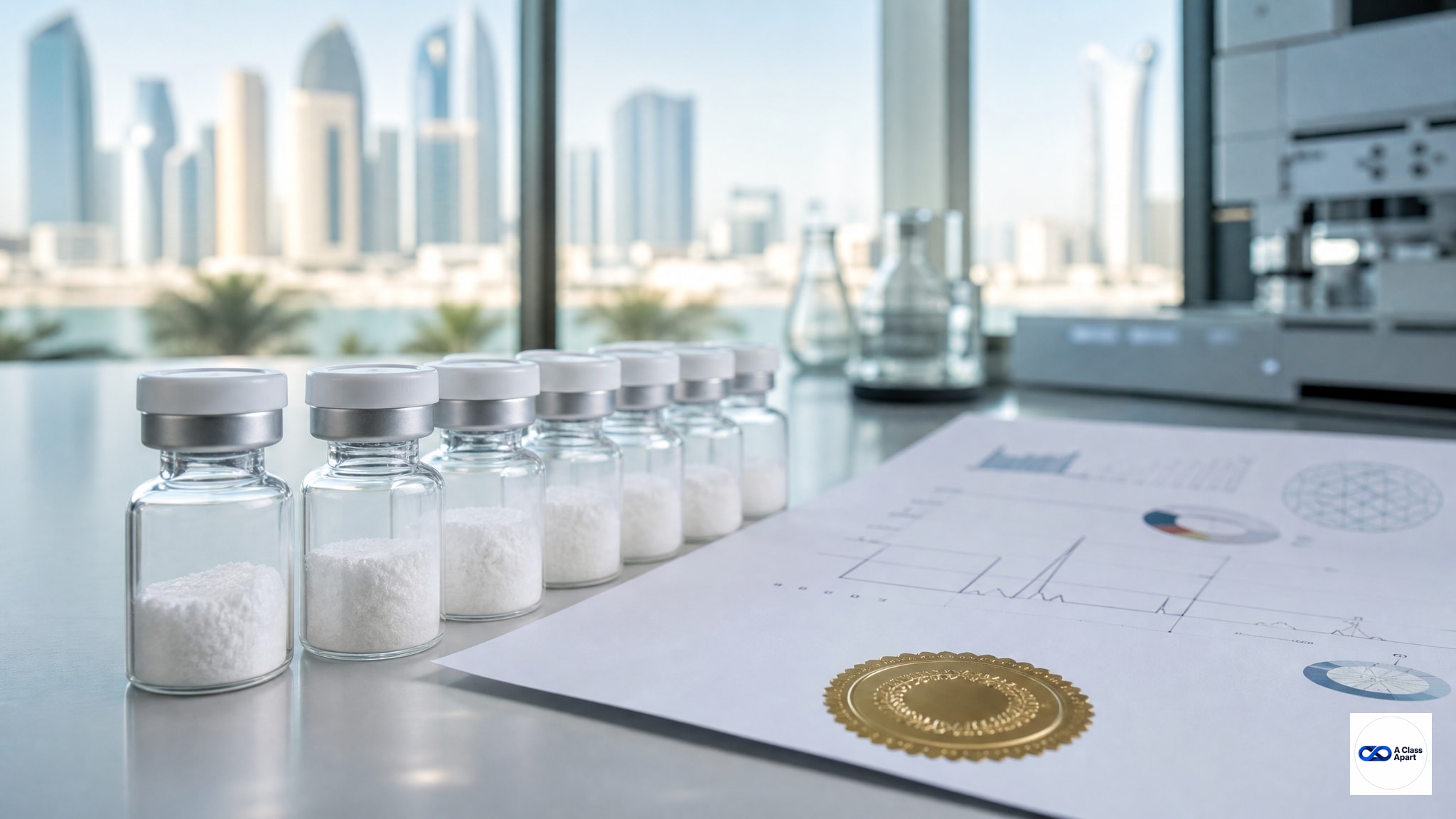
Sourcing Sermorelin for legitimate research in the UAE requires more than just finding a vendor with stock. It necessitates batch-specific analytical data that confirms identity and purity. Many regional listings offer generic product descriptions without the rigorous documentation that scientific work demands. This lack of transparency leaves researchers guessing about the contents of the pre-filled pen. A credible Sermorelin peptide supplier in the UAE provides a verifiable Certificate of Analysis (COA) before any transaction closes, ensuring compliance with recognized laboratory standards.
This article covers the analytical thresholds, documentation requirements, and supply chain considerations that separate accountable sourcing from the rest of the GCC market. Concrete verification is essential; marketing claims are insufficient. Your results must reflect the compound's actual activity rather than undocumented impurities or degradation products.
Understanding documentation-focused Sermorelin Research Peptide Standards
Legitimate sourcing of Sermorelin research peptide in the UAE depends on current, batch-matched analytical data. Historical averages or manufacturer specifications pulled from old files are inadequate. Industry-standard research-grade Sermorelin generally requires ≥98% purity by RP-HPLC. This threshold limits interference from deletion sequences in cell-based assays and serves as the baseline for any material intended for sensitive biological work.
Importance of HPLC Purity Thresholds for GHRH Analogs
Growth hormone-releasing hormone analogs are susceptible to synthesis errors that produce truncated or deletion peptides with similar retention profiles. These variants can bind receptors at different affinities, skewing dose-response curves and negatively impacting assay reproducibility. A simple weight measurement will not catch these issues.
High-performance liquid chromatography (HPLC) separates these closely related species by hydrophobicity. This process provides a quantitative read on the target peptide against process-related impurities. Without this separation data, distinguishing a pre-filled pen containing 99% active Sermorelin from one with only 90% active material mixed with inactive, structurally similar byproducts becomes impossible.
Distinguishing Verified Suppliers from Generic Vendors
A Class Apart provides available product and batch information on request. Researchers should confirm that any analytical document matches the specific lot before purchase or experimental use. In contrast, generic vendors often rely on outdated documentation, stock photos of test results, or certificates lacking the lot numbers necessary to trace material back to a validated production run.
When evaluating a source, request the COA for the exact batch currently in inventory. This step is crucial for confirming that the supplier conducts real-time quality control rather than reposting old data to satisfy inquiries.
Sermorelin COA Verification: Demands for GCC Researchers
A valid Certificate of Analysis is the primary trust signal in peptide procurement. However, this trust is only warranted when the COA contains the specific metrics needed to confirm identity and quantity. For a deeper understanding of how to read these documents, our complete guide to peptide Certificates of Analysis details the data points referenced throughout this piece.
Reject any shipment that arrives without documentation matching the lot number printed on the pre-filled pen label.
Essential Data Points on a Valid Certificate of Analysis
The COA should indicate net peptide content determined by amino acid analysis or UV quantification against a reference standard. This differs from the gross lyophilized weight, which includes salts and residual moisture. The COA must also specify the counterion, typically trifluoroacetate (TFA) or acetate. Excessive TFA can introduce cytotoxicity in cell culture work, unrelated to the peptide's biological activity.
Mass spectrometry confirmation is not optional. HPLC retention time alone cannot prove the sequence is correct. The reported molecular weight should match Sermorelin's theoretical mass (~3357 Da) within the instrument's stated accuracy. This confirmation ensures that the synthesized sequence aligns with the intended GHRH 1-29 structure.
Identifying Red Flags in Peptide Documentation
A COA listing purity as ">99%" without an attached chromatogram suggests that the number may be estimated rather than measured. Certificates that omit testing dates, instrument parameters, or analyst signatures fall short of basic documentation practices and should be treated as unverifiable.
Be cautious of HPLC traces that appear digitally smoothed or lack baseline noise. Authentic chromatograms consistently show minor fluctuations from detector electronics. Recognizing common signs of manipulation is essential for preventing procurement fraud. Our resource on identifying fake peptide COA red flags outlines these subtle indicators of fabricated documentation.
Sermorelin vs CJC-1295 Research: Differentiating COA Profiles
Confusing Sermorelin with CJC-1295 is a persistent risk in secretagogue research. Both compounds target the same receptor pathway, yet they possess distinct chemical structures. Their analytical profiles differ enough that cross-verification is critical when running separate research lines on growth hormone modulation.
Structural Differences Reflected in Purity Testing
Sermorelin (GHRH 1-29) and CJC-1295 exhibit different molecular weights and hydrophobicities. This results in distinct HPLC retention times and mass signatures. Their COAs are not interchangeable. A valid Sermorelin COA displays a distinct HPLC retention time and a molecular weight around 3357 Da, which is markedly different from CJC-1295's ~3368 Da. This difference prevents cross-contamination in secretagogue studies.
A supplier providing identical-looking documentation for multiple GHRH analogs either lacks compound-specific testing or is mislabeling inventory. Our article on CJC-1295 COA verification standards details the parameters specific to that analog.
Avoiding Mislabeling in Growth Hormone Secretagogue Studies
Receiving the wrong analog invalidates research conclusions. Dosing equivalencies do not exist between Sermorelin and modified GHRH variants like CJC-1295. Their pharmacokinetic profiles differ substantially. Even if both compounds are pure, substituting one for the other introduces an uncontrolled variable that no amount of data analysis can rectify.
Always verify that the COA explicitly names the compound and matches the expected mass spectral data before reconstituting the lyophilizate. This check takes only minutes but can save weeks of work based on misidentified starting material.
Peptide Purity Testing Methods for Sermorelin Integrity
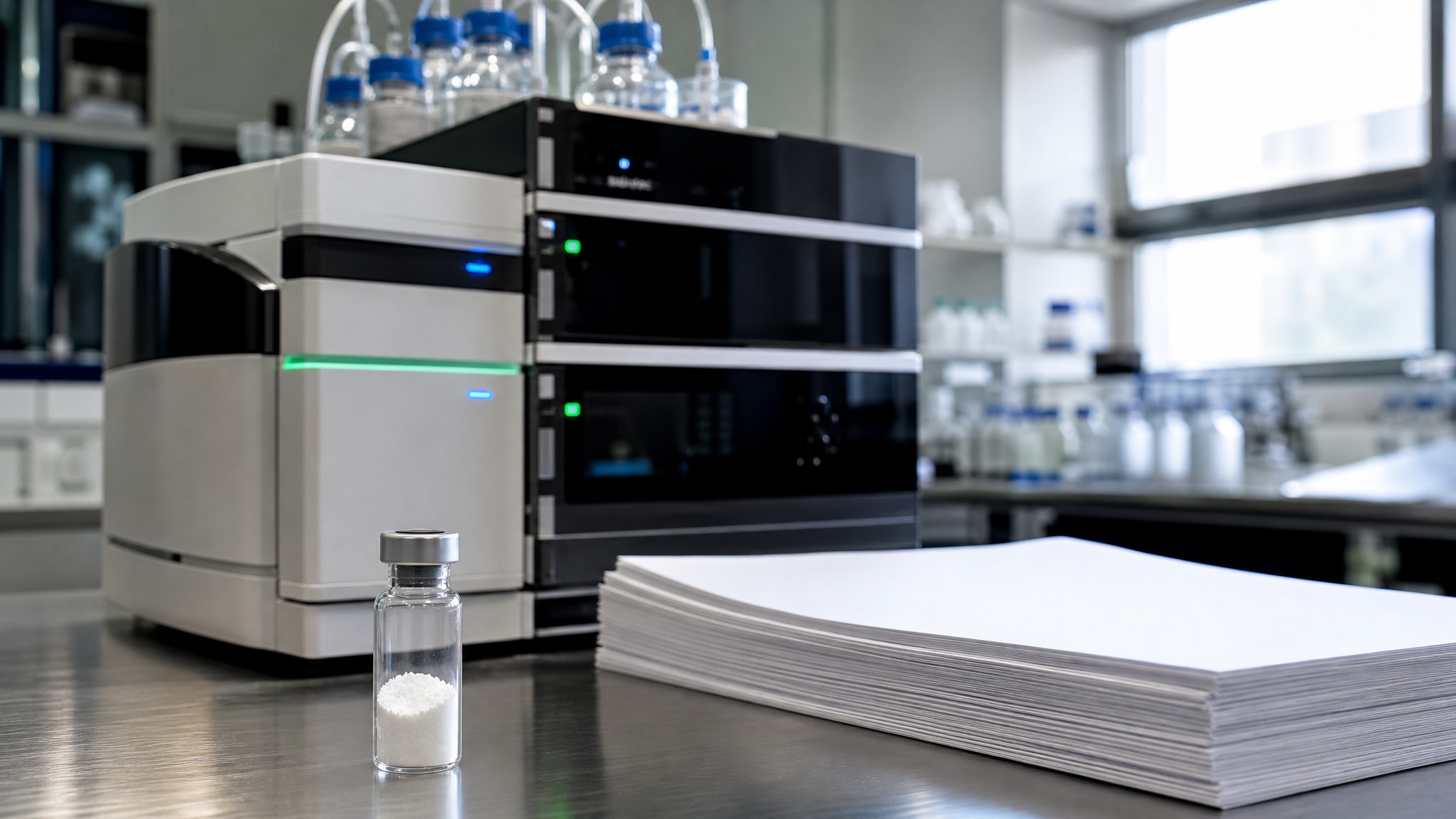
Reverse-phase HPLC paired with mass spectrometry is the industry standard for confirming Sermorelin identity and detecting synthesis-related impurities. UV absorbance alone cannot confirm identity or detect structurally similar impurities. Orthogonal testing with mass spectrometry is essential for generating usable research results.
Chromatographic separation resolves deletion sequences and truncation products that co-elute under isocratic conditions or evade UV detection due to similar extinction coefficients. Mass spectrometry then confirms that the molecular ion matches the full-length sequence, ruling out isobaric contaminants that could pass an HPLC purity check while exhibiting entirely different biological activity.
Relying solely on UV quantification assumes that the peak being analyzed is Sermorelin. This assumption fails often enough to compromise research integrity. Our technical overview on verifying genuine suppliers through HPLC testing explains how proper method validation distinguishes competent manufacturers from those cutting analytical corners.
Navigating the UAE Peptide Supply Chain for Research Compliance
The GCC environment presents stability challenges that extend beyond the manufacturing facility into last-mile logistics. High ambient temperatures and humidity common in the region can accelerate hydrolysis and aggregation if cold-chain protocols lapse during transit or storage.
Storage and Stability Considerations in Gulf Climates
Lyophilized Sermorelin can withstand room temperature for limited periods. However, prolonged exposure to Gulf heat without adequate insulation risks degrading the peptide before it reaches the laboratory. Our guidance on storing lyophilized peptides in hot, humid climates provides region-specific preservation strategies.
Upon receipt, inspect the packaging for signs of thermal exposure, such as condensation inside the pre-filled pen or discoloration of the lyophilizate cake. Immediately transfer the material to -20°C storage. This action minimizes cumulative thermal stress and preserves the integrity documented in the COA.
Documentation Requirements for Institutional Procurement
UAE laboratories operating under institutional oversight require comprehensive batch records to satisfy audits and compliance frameworks. A generic invoice listing only "peptide," without lot-specific traceability, fails to meet procurement standards and creates gaps that may surface during internal or external reviews.
Maintain files linking each purchase order to its COA, shipping manifest, and storage log. This documentation trail demonstrates due diligence in sourcing and proves that research inputs met specifications at the point of use. Such thoroughness supports publication integrity and reproducibility claims.
Where to Buy Sermorelin in the UAE: Evaluating Supplier Accountability
Selecting a supplier hinges on their willingness to provide technical documentation before payment and to answer specific analytical questions. A vendor who hesitates to share current COAs or avoids inquiries about testing methods signals that their quality assurance may not withstand scrutiny.
Accountability manifests as batch-specific data provided consistently, honest communication regarding any deviations from specifications, and clear policies for handling non-conforming material. A Class Apart provides UAE delivery information and storage guidance. Researchers should confirm the packaging and temperature-handling arrangements required for a specific material before ordering.
This documentation-first approach sets the benchmark against which other regional options should be measured. When ready to procure verified material, you can buy documentation-focused research peptides in the UAE through channels prioritizing analytical transparency over volume sales.
Integrating Verified Sermorelin into GCC Research Protocols
Incorporating documentation-focused Sermorelin into research workflows begins with proper reconstitution. Utilize bacteriostatic water or a buffer system that matches the assay requirements. Mix gently to avoid foaming and mechanical shearing, which can denature the peptide and compromise its conformational integrity necessary for receptor binding.
Aliquot reconstituted solutions into single-use volumes to minimize freeze-thaw cycles. These cycles promote aggregation and loss of activity over time. Store aliquots at -20°C or below, and avoid repeated warming. Each thermal cycle degrades the sample further, regardless of its initial purity.
Reliable data depends on treating sourced material as a characterized reagent rather than a commodity chemical. Log the reconstitution parameters, storage conditions, and usage history alongside the original COA. This practice ensures a complete chain of custody behind every result.
Research-use notice: For laboratory research use only. Not for human or veterinary use, and not intended to diagnose, treat, cure, mitigate or prevent disease.
Explore the A Class Apart research catalogue or enquire via WhatsApp on +971 52 627 8691. Free UAE delivery is available on orders from AED 1,000, and payment via WhatsApp can be arranged if preferred.

Comments