
How to Spot Fake Peptide COAs: 7 Red Flags

Updated: Oct 1
A Certificate of Analysis is supposed to answer one question: does this specific batch of peptide contain what the label says, at the purity claimed? For researchers across the UAE and wider GCC, that document is often the only quality check available before a peptide reaches the bench. Knowing how to spot a fake peptide COA isn't a bureaucratic exercise. It's the difference between working with verified material and working with an unknown substance that happens to have a PDF attached.
This guide walks through the specific red flags that separate a fabricated or recycled report from a legitimate third-party lab document. It also gives you a workflow to check any COA yourself.
What a Certificate of Analysis Is Supposed to Prove
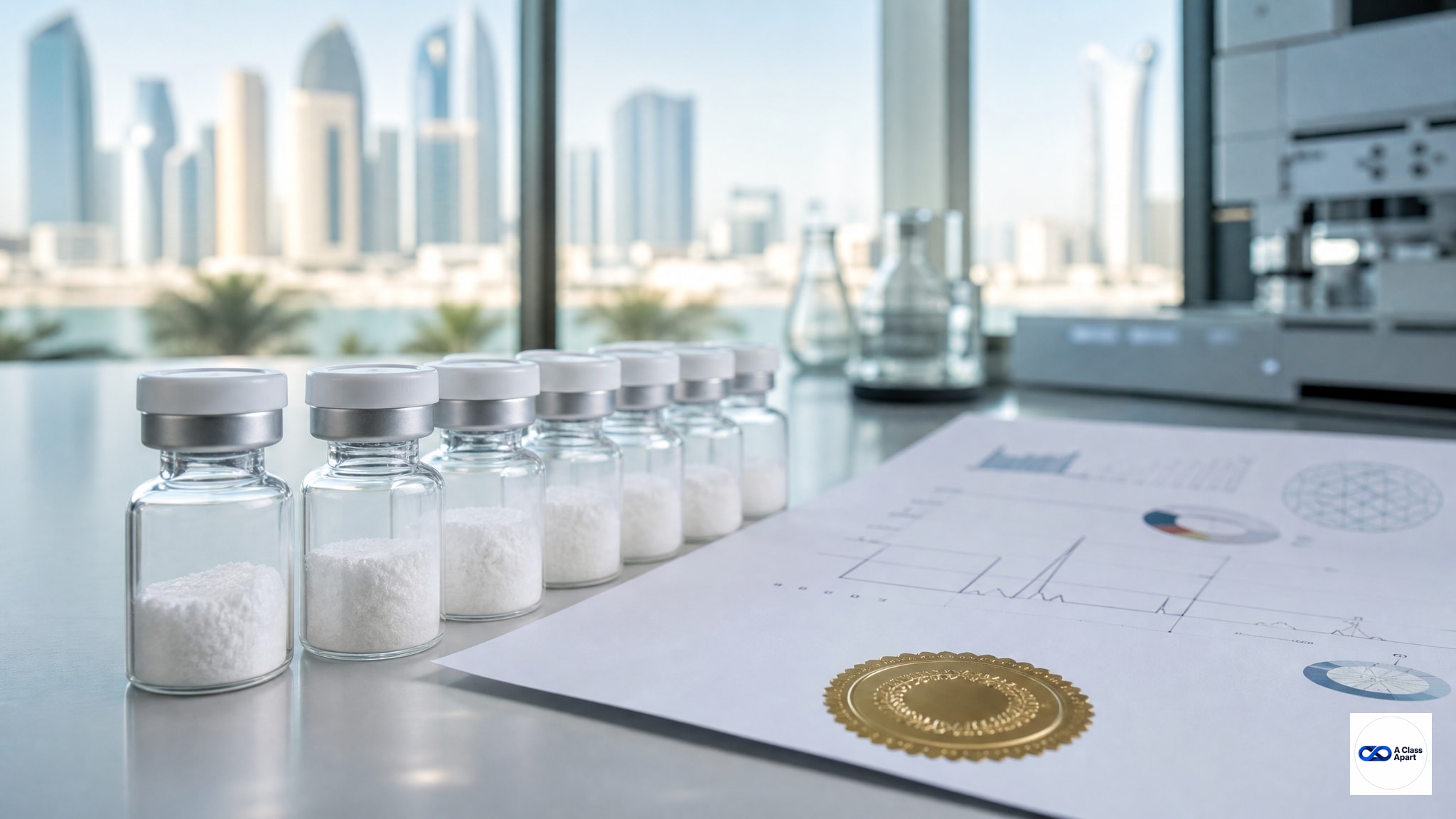
A legitimate COA is batch-specific. It reports results for one production lot, identified by a batch or lot number that ties directly back to the pre-filled pen in your hand. A lab issues it, not the seller, and it names the testing method used to reach its conclusions.
At minimum, a genuine COA should include the product name, the batch number, the date of testing, the testing method (usually HPLC or mass spectrometry), the purity result, and the lab's name and accreditation. If any of these are missing, the document isn't doing its job.
For a full breakdown of what each field means and how labs generate these numbers, the complete guide to Certificates of Analysis covers the underlying testing process in more depth.
Why COAs Matter for Research Peptide Purity
Peptides are sensitive compounds. Small deviations in synthesis, storage, or handling can affect purity, and impurities aren't visible to the eye. A COA is the only practical way to confirm what's actually in the pre-filled pen before it's used in a research setting.
That's precisely why a fake one is so damaging. It doesn't just fail to inform. It actively misleads a researcher into treating an unverified substance as tested and safe.
How to Spot a Fake Peptide COA: 7 Red Flags
Fabricated and recycled COAs tend to share the same weaknesses. Once you know what to check, most fakes reveal themselves in under a minute.
Mismatched Batch Numbers and Product Details
This is the single most reliable check available to a buyer. A recycled COA is easy to spot when the batch number on the document doesn't match the batch number printed on the pre-filled pen label. That mismatch takes seconds to check, but many buyers skip it.
Batch numbers exist because peptide synthesis varies lot to lot. A COA for batch A012 says nothing about the purity of batch A019 sitting on your desk. If the numbers don't match, the report is worthless for that pre-filled pen, no matter how official it looks.
Missing or Unverifiable Lab Accreditation
Legitimate testing labs operate under recognized accreditation and are willing to be named. If a COA lists no lab name, a generic "independent laboratory," or a lab you can't find any public record of, treat it as unverified.
Accredited labs typically list a physical location, an accreditation body, and contact details on their own documentation, not just on the seller's version of it.
Generic, Recycled, or Manufacturer-Issued Reports
Some sellers attach a COA scanned from a manufacturer's website product page rather than one issued by an independent third-party lab for that specific batch. That's a red flag once you know to look for the lab's own letterhead and accreditation marks. A manufacturer testing its own product isn't the same as independent verification.
Watch also for COAs that appear identical across multiple product listings or multiple sellers. If the same document, same date, and same purity figure show up for different batches, it's been recycled rather than generated fresh for each lot.
Vague Testing Methods or Incomplete Purity Data
A real report names its method, HPLC, mass spectrometry, or another specific analytical technique, and states the purity result as a clear number, not a vague pass/fail claim. Reports that just say "tested pure" without a method or numeric result don't meet the bar.
Understanding how peptide purity testing methods actually work makes it much easier to tell a genuine methodology description from a fabricated one. Fake COAs often use language that sounds technical but doesn't correspond to any real testing protocol.
Beyond these, three more patterns are worth checking every time. Look for missing lab contact information (no phone, email, or address to reach the lab directly). Watch for formatting inconsistencies, where fonts, logos, or layouts shift between reports from the "same" lab. And check testing dates against the batch's manufacturing or shipping timeline; if they don't line up logically, that's a problem.
How to Perform a COA Authenticity Check Yourself
Spotting red flags is the first step. Confirming authenticity takes one more: actually verifying the document against an outside source.
Contacting the Testing Lab Directly
Analytical chemists who run HPLC and mass spectrometry testing on peptides generally advise buyers to contact the testing lab directly to confirm a report's authenticity, rather than trusting a PDF alone. Find the lab's contact details independently, through its own website, not through the seller, and ask them to confirm the report number and batch results.
A legitimate lab will typically confirm or deny a report within a short exchange. If a seller discourages this step, or the lab has no record of the report at all, you have your answer.
Cross-Referencing Batch Numbers Against Product Labels
Before accepting any COA, lay the pre-filled pen label and the document side by side. Confirm the batch number, product name, and net quantity all match exactly.
This single cross-check catches most recycled documentation on its own. For a broader pre-purchase workflow that covers packaging, labeling, and sourcing checks alongside COA verification, the checklist for verifying peptide quality before purchase walks through the full process step by step.
Fraudulent Peptide Documentation: Why It's Spreading in the GCC Market
Research peptides largely sit outside the kind of regulatory framework that governs pharmaceuticals. That gap creates room for sellers to issue their own paperwork with little risk of it being formally challenged.
Independent testing of gray-market research chemicals and supplements has repeatedly found that a meaningful share of products deviate from their labeled purity or identity. That's why regulators and quality-conscious buyers treat third-party verification as non-negotiable rather than optional. In markets with limited local oversight, buyers often place more trust in a COA's appearance than in its actual origin.
GCC researchers face a particular exposure here. Much of the regional supply chain routes through international sellers whose documentation is hard to verify from a distance. Local recourse, if the paperwork turns out to be false, is limited. Understanding the peptide sourcing regulations researchers should know helps explain why documentation scrutiny matters even more in this region than in more tightly regulated markets.
As demand for research peptides grows across the UAE and neighboring countries in 2026, the incentive to fabricate documentation grows with it. A convincing-looking COA costs the seller nothing to produce, and until a buyer checks it, works exactly like a real one.
Peptide Supplier Red Flags Beyond the COA
A fabricated COA rarely travels alone. Certain seller behaviors tend to show up alongside it, and they're worth checking even when the paperwork looks fine.
No verifiable physical business presence is one of the clearest signs. A supplier operating only through anonymous storefronts or messaging apps, with no registered address, gives you no way to hold them accountable.
Refusal to share lab contact details is another. If a seller won't tell you which lab tested a batch, or discourages you from reaching out directly, that reluctance is itself informative.
Pressure-selling often substitutes for the substance a legitimate supplier would provide instead: urgency around limited stock, discounts tied to immediate payment, or reluctance to answer technical questions. Inconsistent branding across a seller's website, packaging, and documentation is a further sign that the operation may be assembling paperwork rather than sourcing it. For a fuller framework on evaluating vendors operating in this region, the quality and compliance guide for GCC peptide suppliers sets out the criteria in detail.
Choosing a Supplier With Verifiable Laboratory Documentation
None of these checks require special equipment. They require a habit: treat every COA as a claim to verify, not a document to trust on sight.
A Class Apart issues a distinct, Laboratory Documentation for every batch sold to GCC researchers, allowing direct cross-checking against the testing lab's own records. Each report ties to a specific batch, names its testing method, and can be confirmed independently rather than taken on faith.
Before your next purchase, cross-check the batch number, confirm the lab's identity, and contact that lab if anything looks off. Researchers who want documentation built this way from the start can review the COA Documentation peptide catalog for GCC labs for batches with verifiable, lab-issued reports attached.
Research-use notice: For laboratory research use only. Not for human or veterinary use, and not intended to diagnose, treat, cure, mitigate or prevent disease.
Explore the A Class Apart research catalogue or enquire via WhatsApp on +971 52 627 8691. Free UAE delivery is available on orders from AED 1,000, and payment via WhatsApp can be arranged if preferred.

Comments