
AOD-9604 Research Material UAE: Documentation Guide

Updated: Oct 1
Researchers across the UAE searching for AOD-9604 usually find the same thing: a product photo, a price, and a short description with no purity data behind it. That gap matters more for this compound than for most. AOD-9604 is a modified fragment peptide with its own stability and testing profile. Before ordering, a researcher needs to see the documentation, not just the listing.
What Is AOD-9604 and Why Its COA Matters
AOD-9604 is a modified fragment of human growth hormone, corresponding to the 176-191 region of the HGH sequence. Researchers use it in metabolic research settings to study lipid metabolism pathways. It's a fragment rather than the full-length hormone, so its molecular weight, folding behavior, and stability differ from other research peptides sold under similar-sounding names.
That distinction is why a Certificate of Analysis (COA) matters so much for this specific compound. A generic UAE peptide listing that shows only a product photo and price, with no purity percentage or batch-specific COA, can't be validated by the researcher receiving it. Without a COA tied to the actual pre-filled pen, there's no way to confirm the pre-filled pen contains AOD-9604 at all, let alone at a usable purity level.
AOD-9604 vs Standard Fragment Peptides
Casual marketplace listings often group AOD-9604 with "standard fragment peptides," but that comparison undersells the differences that matter for research validity. Its specific amino acid sequence and molecular weight set it apart from other HGH-derived fragments. A COA for AOD-9604 needs to confirm that exact molecular weight, not just a general fragment-peptide range. A supplier that treats all fragment peptides as interchangeable on its documentation is a warning sign, not a convenience.
How to Read an AOD-9604 COA Before You Buy
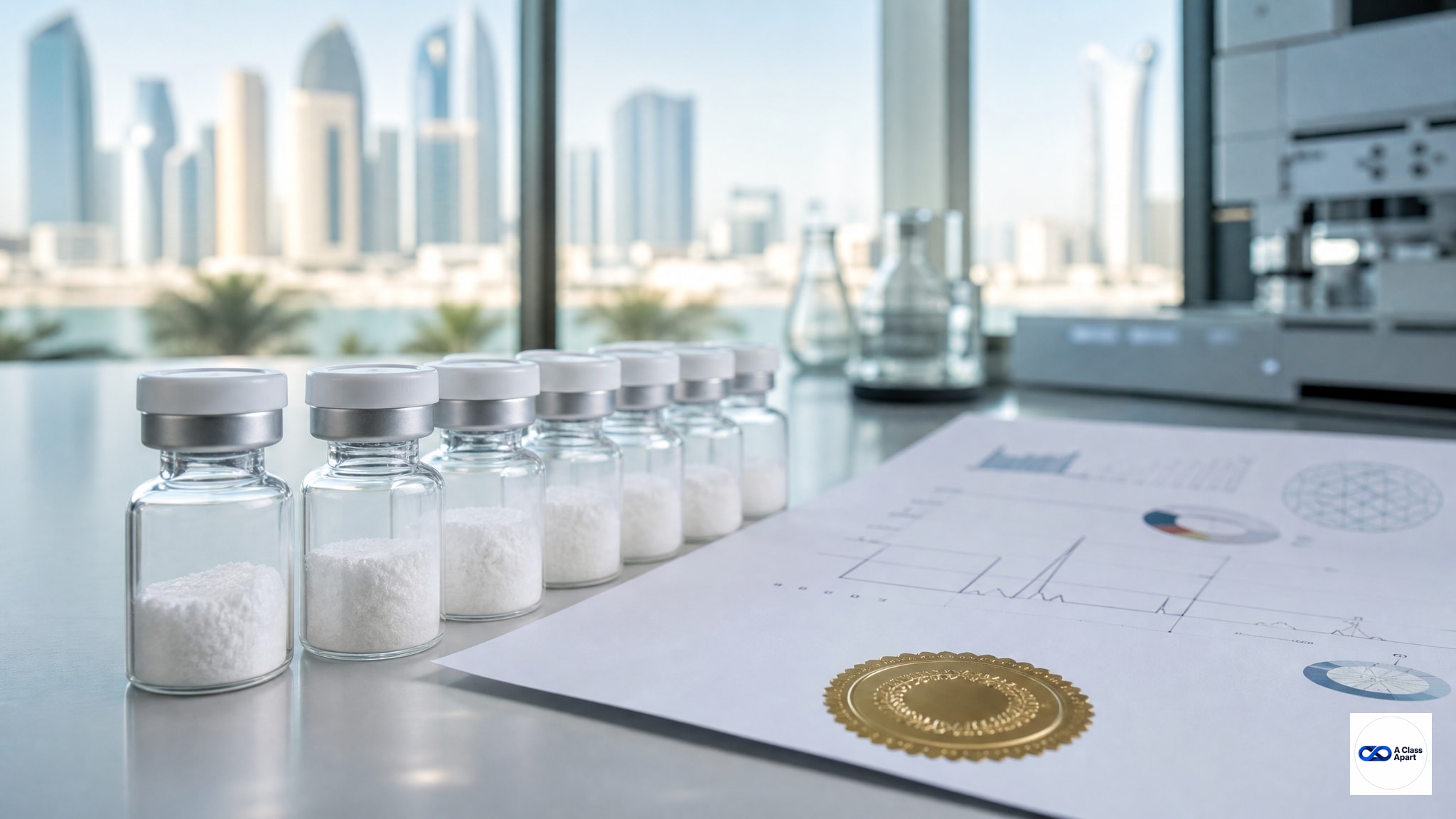
A genuine COA for AOD-9604 is a lab document, not a marketing sheet. A third-party testing lab should issue it, date it, and tie it to a specific batch or lot number rather than presenting it as a generic template reused across products. If you look at how to read a peptide Certificate of Analysis before you order, you'll know exactly what fields to expect and which ones are non-negotiable.
HPLC Purity Percentage Explained
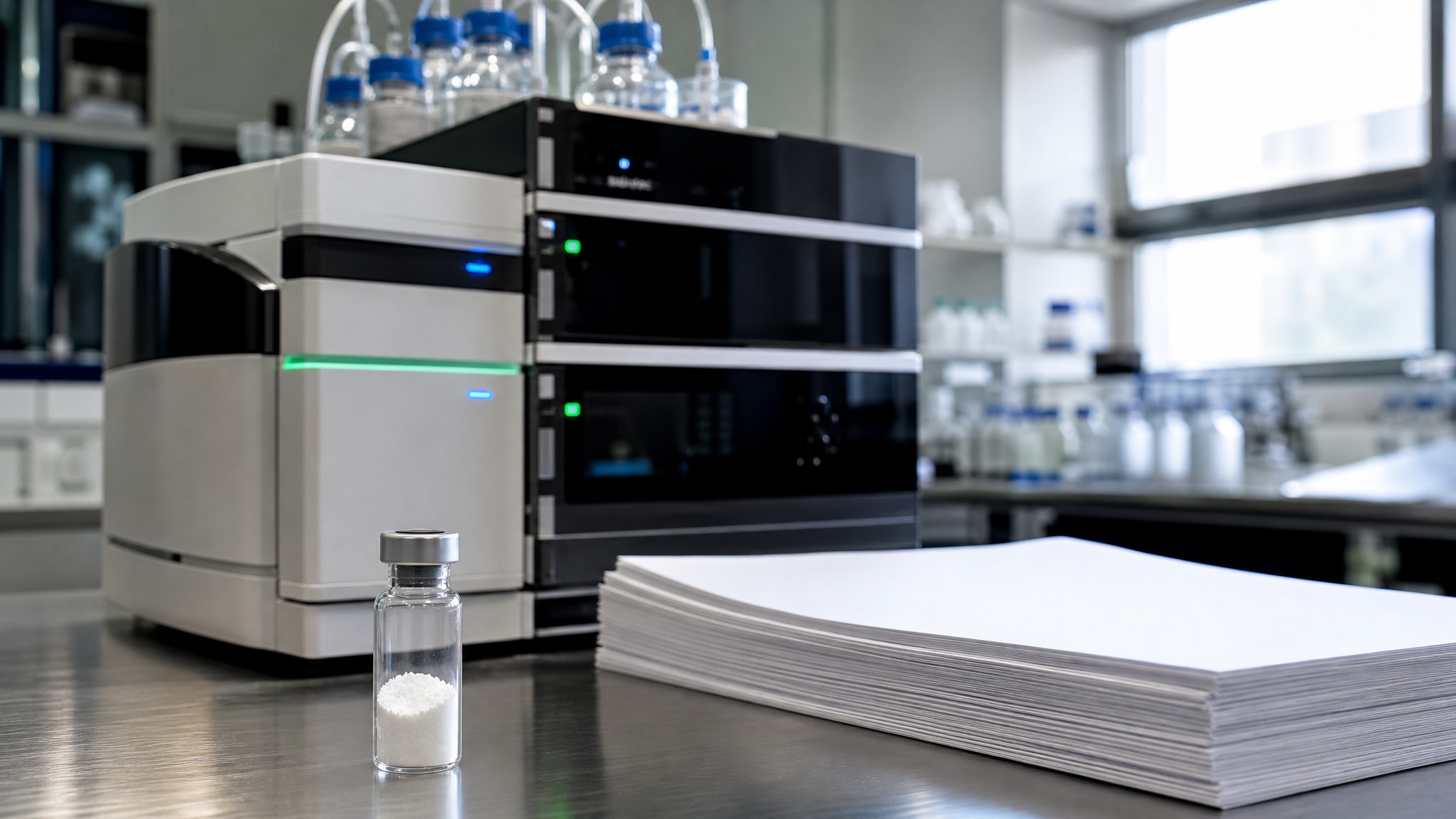
High-performance liquid chromatography, or HPLC, is the standard method labs use to measure peptide purity. The test separates the compound from any residual impurities and reports the result as a percentage. Reputable research-peptide COAs typically report HPLC purity in the high 90s percent range. The exact figure varies batch to batch rather than staying fixed as a marketing number.
That variation is normal and expected. A Class Apart provides available product and batch information on request. Researchers should confirm that any analytical document matches the specific lot before purchase or experimental use. For a deeper look at how these tests are run and what the chromatogram output actually shows, the guide to peptide purity testing methods covers the methodology in more detail.
Molecular Weight Confirmation and Batch Numbers
Purity alone doesn't confirm identity. A COA should also report the molecular weight, ideally confirmed by mass spectrometry, matching the known molecular weight of AOD-9604. If the purity percentage looks fine but the molecular weight isn't listed, or doesn't match the compound's known figure, the document isn't telling the full story.
The batch or lot number ties the paperwork to the physical pre-filled pen. A Class Apart provides UAE delivery information and storage guidance. Researchers should confirm the packaging and temperature-handling arrangements required for a specific material before ordering. When the number printed on the pre-filled pen label matches the number on the COA, a researcher can independently confirm they've received what the lab tested. If those numbers don't match, or the supplier can't explain why, that's grounds to pause the order.
Finding a documentation-focused AOD-9604 Peptide Supplier in the UAE
Most AOD-9604 listings aimed at the UAE market read like retail product pages: a name, an image, a short bullet list of claims. A documentation-focused AOD-9604 peptide supplier UAE researchers can actually rely on looks different. It publishes per-batch documentation, not a single stock image and a generic spec sheet reused for years.
Signs a UAE Vendor Listing Is Generic, Not Verified
A few patterns tend to repeat across thin listings. The description uses vague language like "high purity" without a percentage attached. There's no downloadable or on-request COA, only a promise that "documentation is available." The batch number, if mentioned at all, isn't cross-referenced anywhere in the listing.
Learning to spot fake peptide COAs helps here, since some vendors do supply a document, just not one that matches what was actually tested. A researcher comparing options can also use a general checklist for verifying peptide quality before purchase as a baseline before narrowing in on AOD-9604 specifically. The same due diligence applies if you're comparing multiple compounds and want to verify a genuine HPLC-tested supplier across a wider catalog, not just for a single product line.
AOD-9604 Reconstitution Guide for Research Use
Reconstitution instructions for AOD-9604 shouldn't be copied from generic multi-peptide guides. This fragment peptide has its own solubility and stability characteristics. Treating it like every other lyophilized compound risks degrading it before research even begins.
For most research applications, researchers add bacteriostatic water slowly down the side of the pre-filled pen rather than directly onto the lyophilized powder. This limits foaming and mechanical stress on the peptide structure. The pre-filled pen should then be swirled gently, never shaken, until the powder fully dissolves into a clear solution.
Diluent Choice and Storage After Mixing
Bacteriostatic water is the standard diluent for AOD-9604 reconstitution in a research setting, because its benzyl alcohol content helps limit bacterial growth over the pre-filled pen's working life. The exact volume added depends on the desired concentration for the specific research protocol, so researchers should calculate this before opening the pre-filled pen rather than guessing.
A Class Apart writes its reconstitution guidance for fragment peptides like AOD-9604 to reflect the compound's own stability profile rather than reusing generic multi-peptide instructions. Once reconstituted, the pre-filled pen should be refrigerated and used within the timeframe specified on the product documentation. Given the UAE's heat and humidity, refrigeration discipline matters even more than it would in a cooler climate. The guide on storing lyophilized peptides in the UAE climate covers pre-reconstitution storage conditions in more depth.
Ordering AOD-9604 with GCC-Compliant Shipping
Researchers across the UAE and the wider GCC can order AOD-9604 for laboratory research purposes, provided the order is handled with the documentation and shipping conditions research use requires. This isn't a medical product moving through a pharmacy channel. It's a research compound moving through a compliance-aware supply chain, and the paperwork should reflect that at every step.
A properly handled order ships with temperature awareness built into the packaging, since fragment peptides are sensitive to heat exposure in transit. A Class Apart provides available product and batch information on request. Researchers should confirm that any analytical document matches the specific lot before purchase or experimental use. Lead times vary depending on origin and destination within the GCC, but a supplier working within compliant channels should be able to give a clear estimate before the order is placed.
Anyone weighing supplier options against broader regional requirements can review the research peptide supplier compliance guide for the GCC for the wider regulatory context that applies to this category of ordering. From there, researchers ready to compare documented options can browse the full COA Documentation research peptide catalog to see current batches and their associated paperwork.
Responsible Research Practices with AOD-9604
AOD-9604 is sold strictly for laboratory research. It is not intended for human or animal consumption, and any supplier framing it otherwise is stepping outside the bounds of what this class of compound is meant for.
Good research practice means keeping records that mirror what the supplier provides: the batch number, the COA, the reconstitution log, and storage conditions over the life of the pre-filled pen. This record-keeping does two things. It protects the integrity of the research itself, and it gives the lab a paper trail if a compound's performance ever needs checking against its original documentation.
Before placing an order, ask the supplier directly for the batch-specific COA tied to the AOD-9604 lot they intend to ship. A supplier confident in its testing process will provide it without hesitation. A researcher who reviews it before purchase starts the project with the documentation already in hand.
Research-use notice: For laboratory research use only. Not for human or veterinary use, and not intended to diagnose, treat, cure, mitigate or prevent disease.
Explore the A Class Apart research catalogue or enquire via WhatsApp on +971 52 627 8691. Free UAE delivery is available on orders from AED 1,000, and payment via WhatsApp can be arranged if preferred.

Comments