
Tirzepatide Research Peptide UAE: Documentation Guide

Updated: Oct 1
Tirzepatide has become one of the most closely watched molecules in incretin research. That attention has brought a flood of vendor listings across the UAE and wider Gulf market. Most of those listings are thin: a product name, a pre-filled pen size, a price. Few explain what makes this peptide structurally different from earlier incretins. Fewer still show the batch-specific documentation that lets a researcher confirm what's actually in the pre-filled pen. This article works through the mechanism, the purity standards, the COA verification process, and the storage handling a scientifically literate buyer should expect from any Tirzepatide peptide supplier in the UAE.
Tirzepatide as a GIP/GLP-1 Dual Agonist: What Researchers Need to Know
Tirzepatide isn't a variant of an existing GLP-1 molecule. It's a single peptide chain engineered to activate two separate incretin receptors at once. That dual action is why it draws so much research interest. It's also why synthesis quality control matters more here than with simpler peptides.
Any credible discussion of a Tirzepatide research peptide has to start with this structural distinction. It directly shapes what "purity" and "correct synthesis" mean for this molecule.
The Dual-Receptor Mechanism Explained
Tirzepatide binds both the GIP (glucose-dependent insulinotropic polypeptide) receptor and the GLP-1 (glucagon-like peptide-1) receptor. Earlier incretin-based peptides act on GLP-1 receptors alone. That's why research literature describes tirzepatide as a GIP/GLP-1 dual agonist peptide rather than a straightforward GLP-1 analog.
Engaging two receptor pathways with one molecule requires a more elaborate amino acid backbone and a specific fatty-acid side chain for receptor binding stability. Each of those structural elements has to be synthesized correctly, in the right sequence, for the peptide to behave as intended in a research setting.
Why Dual-Agonist Peptides Are Harder to Synthesize Correctly
More binding sites and a longer chain mean more steps where synthesis can go wrong. A single-pathway GLP-1 peptide has fewer functional regions that need to fold and couple correctly. Tirzepatide has more of them. Each one adds a chance for incomplete coupling, truncated sequences, or side-chain errors during production.
This is exactly why purity documentation for tirzepatide deserves closer scrutiny than for simpler incretins. A supplier who can't produce clean testing data for a molecule this complex hasn't adequately verified its own synthesis process.
Purity and HPLC Testing Standards for Tirzepatide Batches
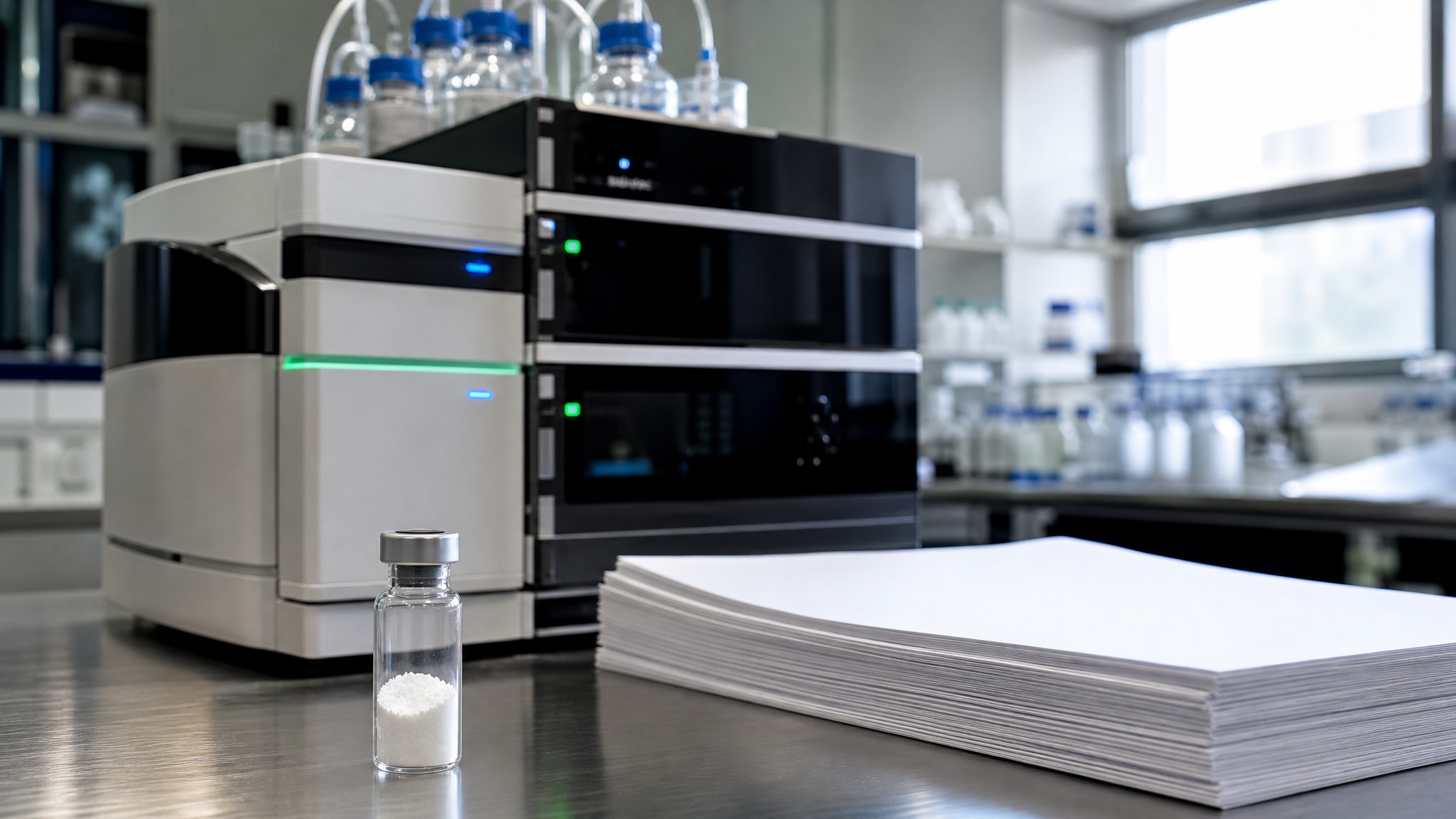
Purity data is the first concrete signal a buyer can check before committing to a purchase. For Tirzepatide research peptide batches, that data should come from high-performance liquid chromatography (HPLC), the standard method labs use to separate and quantify a peptide against its impurities.
Tirzepatide purity testing matters more here than for smaller molecules. The larger structure gives synthesis byproducts more places to hide inside an otherwise plausible-looking result.
What HPLC Purity Data Should Show
A legitimate HPLC report shows a single dominant peak corresponding to the target peptide. Any secondary peaks, representing impurities or incomplete synthesis fragments, should show up as a small, clearly labeled percentage. Reputable research peptide suppliers typically report purity in the high nineties, commonly above 98%, and a batch-matched COA should state that exact figure rather than a rounded marketing claim.
A vague purity claim printed on packaging, without a corresponding chromatogram, isn't evidence. It's a label. A Class Apart provides available product and batch information on request. Researchers should confirm that any analytical document matches the specific lot before purchase or experimental use. Reading how HPLC testing verifies genuine suppliers explains what a legitimate chromatogram looks like in more depth.
Mass Spec Confirmation and Why It Matters for Larger Peptides
HPLC confirms how pure a sample is, but it doesn't confirm the molecule is structurally correct. That's where mass spectrometry comes in. It measures molecular weight and confirms the peptide matches its expected structure rather than a truncated or mis-synthesized variant with a similar retention time.
Tirzepatide is a larger, more complex peptide than single-pathway GLP-1 agonists, so this check carries more weight. A mass spec result that matches tirzepatide's known molecular weight is a meaningful sign that synthesis produced the actual target molecule, not just something similar enough to pass an HPLC peak. Buyers evaluating a research chemical Tirzepatide supplier should ask specifically whether mass spec data accompanies the HPLC report, not just assume it exists. A broader look at peptide purity testing methods used across the catalog covers how these two tests work together.
How to Verify the COA for a Tirzepatide Pre-filled Pen Before Purchase
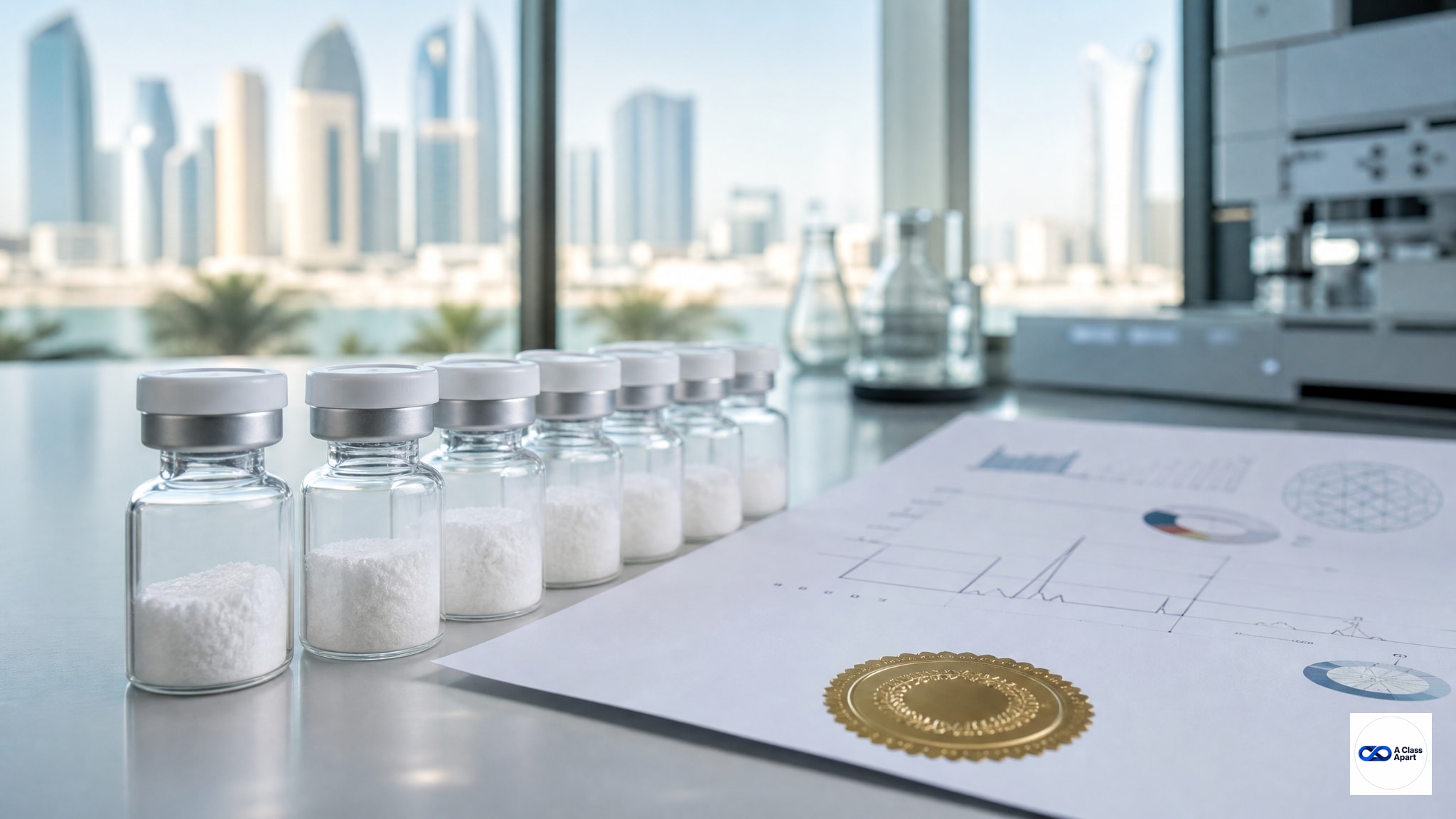
A Certificate of Analysis is only useful if it can be tied to the specific pre-filled pen in hand. A COA that isn't batch-matched is marketing collateral, not a lab document. A Class Apart provides available product and batch information on request. Researchers should confirm that any analytical document matches the specific lot before purchase or experimental use.
Getting comfortable with Tirzepatide COA Documentation documentation is a habit worth building before ordering from any supplier, not just this one.
Matching Batch Numbers to Certificates
The process is straightforward. A researcher receiving a new Tirzepatide batch can look up the lot number printed on the pre-filled pen label against the corresponding COA on file, rather than relying on a generic, undated certificate. That lot number should appear on both the pre-filled pen and the COA document, and the two should match exactly. Not approximately. Not "close enough."
If a supplier can't produce a COA tied to that specific lot number on request, that's a gap worth taking seriously. For a closer look at how these documents are laid out, how a Certificate of Analysis is structured breaks down each section of a typical report.
Red Flags in Unverifiable or Generic COAs
A few patterns show up consistently among unreliable listings: a COA with no batch number, a COA dated before the product line existed, a COA that looks identical across unrelated products, or a COA with no named testing lab. Each is a sign the document wasn't generated for the pre-filled pen in question.
None of these on their own proves fraud. Together, they suggest a supplier isn't running a real batch-tracking process. A dedicated resource on red flags that signal a fake peptide COA walks through each of these patterns in more detail.
Cold-Chain Handling and Lyophilized Storage in the UAE Climate
Even a correctly synthesized, properly documented Tirzepatide pre-filled pen can degrade if it's stored badly. The UAE's ambient heat and humidity make this a real operational concern, not a theoretical one. Peptides are sensitive to both temperature and moisture, and lyophilized (freeze-dried) tirzepatide is no exception.
Storage Before Reconstitution
Lyophilized peptide should stay refrigerated, generally between 2°C and 8°C, from the moment it arrives until it's reconstituted. Leaving a pre-filled pen at room temperature in a Gulf climate, even briefly during transit or storage, speeds up degradation far more than it would in a cooler environment.
A Class Apart's storage guidance reflects the UAE's high ambient heat and humidity. It recommends keeping lyophilized peptides refrigerated and using reconstituted solutions within the supplier's stated window to preserve stability. For a deeper look at the climate-specific risks involved, storing lyophilized peptides in hot, humid climates covers the mechanics of moisture exposure and thermal degradation in more detail.
Tirzepatide Pre-filled Pen Reconstitution and Stability Windows
Tirzepatide pre-filled pen reconstitution should use the diluent volume and method specified for that particular product. Add it slowly along the pre-filled pen wall rather than injecting it directly onto the lyophilized powder, to avoid disrupting the peptide structure with excess agitation.
Once reconstituted, the solution has a limited stability window and should stay refrigerated between uses. Researchers should follow the supplier's stated timeframe for use after reconstitution rather than assume indefinite stability. A reconstituted peptide solution is chemically less stable than the lyophilized powder it came from.
Sourcing Transparency: Batch Numbers, Lab Partners, and Documentation Trails
Purity data and cold-chain handling both depend on one underlying condition: the supplier actually has a documentation trail to share. This is the piece most thin UAE listings skip entirely.
What a Transparent Supplier Discloses
A transparent supplier should be able to provide, on request: the batch or lot number for the specific pre-filled pen being purchased, a COA matched to that batch, the identity or credentials of the testing lab that generated the HPLC and mass spec data, and clear reconstitution and storage guidance specific to that product.
None of this is a special favor. It's the baseline documentation any legitimate research reagent supplier should maintain as a matter of course. If a vendor treats a request for batch-matched documentation as unusual or difficult to fulfill, that hesitation is itself informative. The broader standards involved are covered in quality and compliance standards for GCC peptide sourcing.
Buying Tirzepatide Research Peptide in the UAE and Wider GCC
Demand for Tirzepatide research peptide GCC-wide has grown alongside the compound's research profile. Sourcing decisions in the region carry the same logistics considerations as anywhere else: import handling, cold-chain continuity from arrival to storage, and documentation that travels with the product rather than existing separately from it.
Researchers looking to buy Tirzepatide from UAE-based suppliers should treat the sourcing question the same way they'd treat any other lab reagent decision: verify the documentation first, then place the order. Those ready to move forward can browse the full documentation-focused research peptide supplyA Class Apart provides available product and batch information on request. Researchers should confirm that any analytical document matches the specific lot before purchase or experimental use.
Tirzepatide vs Other Incretin-Based Research Peptides in the Catalog
Tirzepatide sits alongside other incretin-based peptides in most research catalogs. Understanding where it fits mechanistically helps frame what to expect from purity and documentation standards across the category.
Comparing Tirzepatide to Semaglutide as Research Compounds
Semaglutide acts on the GLP-1 receptor alone. Tirzepatide acts on both the GIP and GLP-1 receptors. That single structural difference is the core distinction researchers weigh when choosing between the two compounds for a given study design.
The dual mechanism also means tirzepatide's synthesis and testing standards deserve the same scrutiny described above, arguably more, given the added structural complexity. For a side-by-side look at comparing Tirzepatide to Semaglutide as a research peptide, the sourcing article on semaglutide covers the single-agonist testing profile in detail.
Whichever compound a study calls for, the sourcing standard shouldn't change: batch-matched COA, HPLC and mass spec confirmation, and documented cold-chain handling from arrival through reconstitution. Researchers evaluating a Tirzepatide peptide supplier in the UAE should ask for that documentation before ordering, not after.
Research-use notice: For laboratory research use only. Not for human or veterinary use, and not intended to diagnose, treat, cure, mitigate or prevent disease.
Explore the A Class Apart research catalogue or enquire via WhatsApp on +971 52 627 8691. Free UAE delivery is available on orders from AED 1,000, and payment via WhatsApp can be arranged if preferred.

Comments