
Melanotan 2 Research Peptide UAE: Documentation Guide

Updated: Oct 1
Researchers evaluating a Melanotan 2 peptide supplier in the UAE run into a common problem. Most listings show a price and a purity claim, but few publish the documentation behind that claim. A percentage on a product page means little without a certificate of analysis tied to the exact batch shipped. This article covers what that documentation should contain, how purity is actually tested, and what to check before you commit to any Melanotan 2 research peptide buy decision in the UAE or wider GCC region.
What Melanotan 2 Is and Why Purity Data Matters
Melanotan 2 is a synthetic peptide used in laboratory and research settings, typically supplied as a lyophilized (freeze-dried) powder in a sealed pre-filled pen. Like any synthesized compound, its research value depends on how closely the delivered material matches its intended chemical identity.
That's why purity data isn't an optional add-on. A researcher relying on a peptide sample for controlled work needs confidence that the pre-filled pen contains what the label says, at a known concentration, with minimal contaminating byproducts from synthesis. Without HPLC-confirmed purity and molecular weight verification, there's no real way to know what's in the pre-filled pen.
Molecular Structure and Standard Specifications
Melanotan 2 has a specific amino acid sequence and molecular weight. That's why every legitimate specification sheet lists the compound's molecular formula and expected mass alongside its purity figure. These are the baseline data points a supplier should show for any batch, not a generic spec sheet copied across a whole product catalog.
When a listing shows only a purity percentage and nothing else, that's a sign the documentation stops at marketing copy rather than lab testing. A genuine specification includes the molecular weight range confirmed by mass spectrometry, matched against the reference structure for the compound.
Reading a Melanotan 2 COA Documentation Certificate
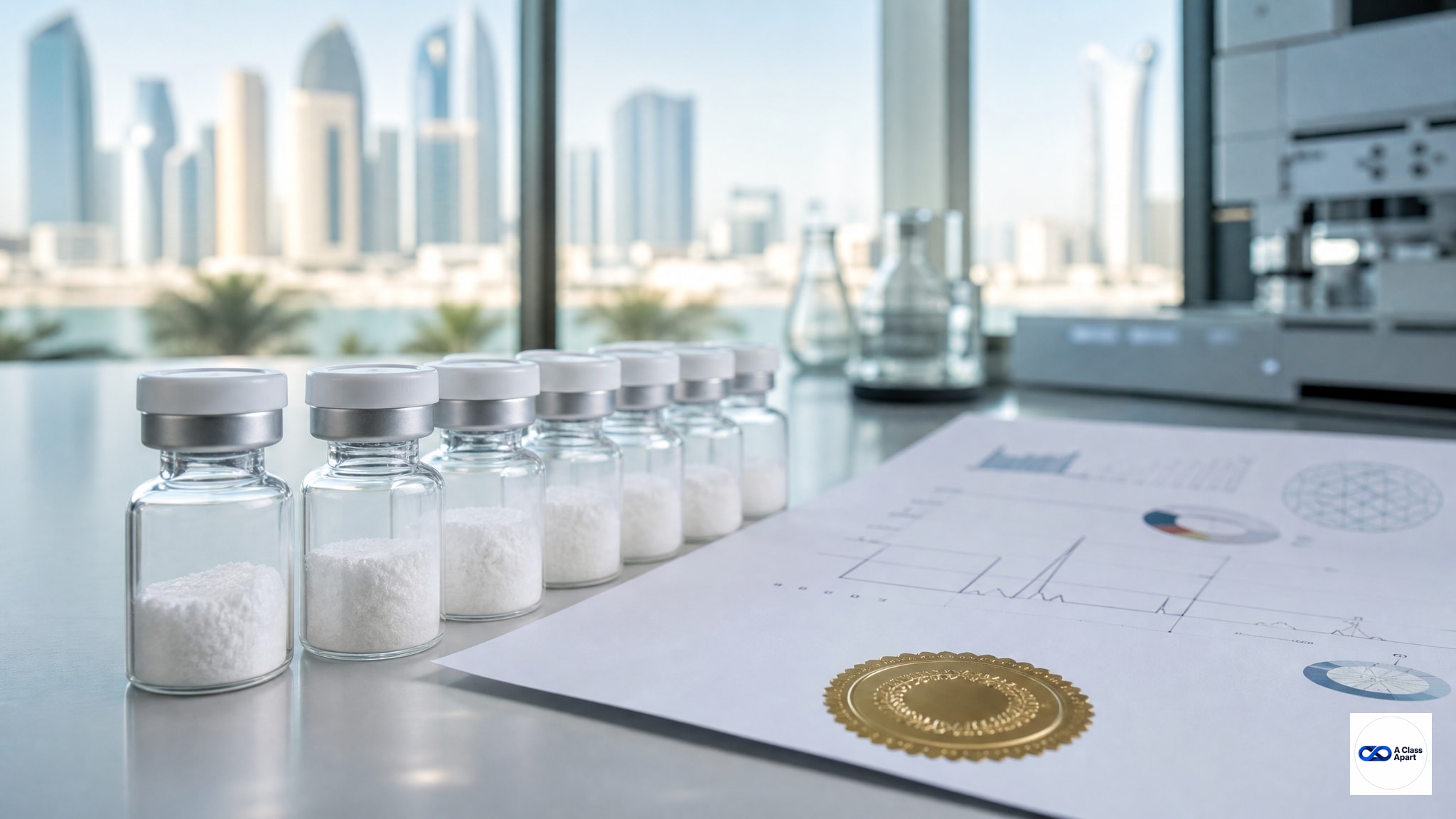
A certificate of analysis, or COA, is the document that turns a purity claim into a verifiable fact. For Melanotan 2, a legitimate COA should be issued per batch, not reused across every order a supplier ships.
Purity Percentage, Batch Number, and Test Date
A proper COA includes several fields, and each one matters. The purity percentage should come from an actual test run, not a rounded marketing number. The batch or lot number ties the certificate to one specific production run. That lets a buyer confirm the pre-filled pen in hand matches the document.
The test method should be named explicitly, typically HPLC or mass spectrometry, along with the date the test was performed and, ideally, an expiry or retest date. If a document is missing the batch number or the test date, it isn't a real certificate of analysis. It's a template.
For a full breakdown of every field and what each one is supposed to prove, how to read a certificate of analysis in full covers the format in more depth.
A Class Apart provides available product and batch information on request. Researchers should confirm that any analytical document matches the specific lot before purchase or experimental use.
A Class Apart provides UAE delivery information and storage guidance. Researchers should confirm the packaging and temperature-handling arrangements required for a specific material before ordering. The document a researcher receives corresponds to the physical pre-filled pen they're ordering, not a generic reference sample from an earlier production run.
The workflow is straightforward from the buyer's side. A researcher comparing two UAE listings for the same peptide can request the COA before payment. If a supplier can't produce a batch-matched certificate on demand, that alone is a disqualifying red flag. Legitimate suppliers make this documentation available without friction, because it's the core of what they're selling alongside the compound itself.
Melanotan 2 Purity Testing Methods Explained
Purity testing isn't a single step. It's a combination of methods that together confirm how much of the target compound is present, and whether that compound is structurally correct.
HPLC vs Mass Spectrometry
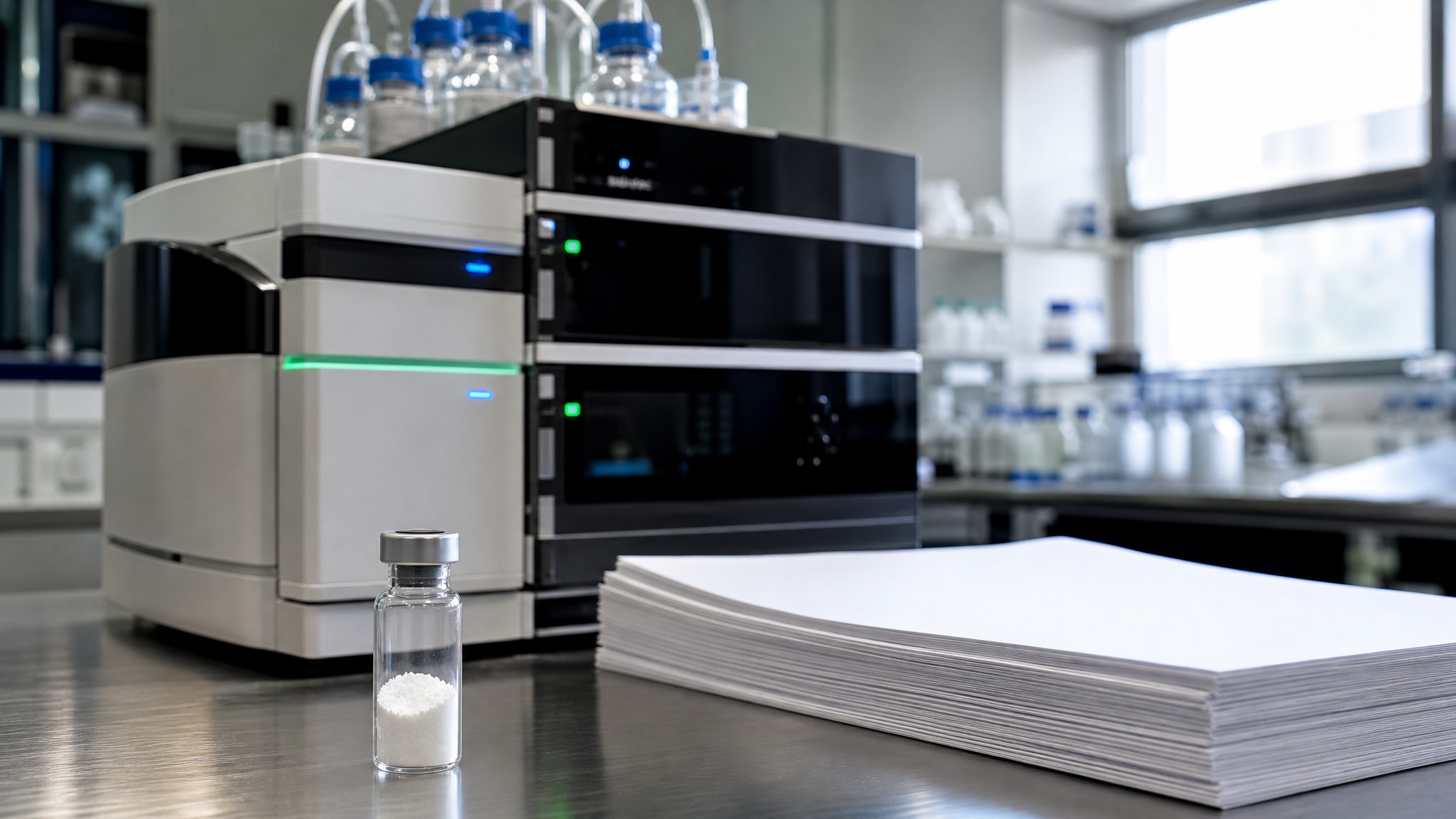
High-performance liquid chromatography, or HPLC, separates a sample into its individual components based on how they interact with a chromatography column. This lets analysts quantify what percentage of the sample is the target peptide versus leftover synthesis byproducts or degradation products. It's the industry-standard method for measuring peptide purity because it produces a clear, repeatable percentage figure.
Mass spectrometry works differently. It confirms molecular identity by measuring the mass-to-charge ratio of the compound. That verifies what's present actually matches the expected molecular weight of Melanotan 2, rather than a structurally similar but incorrect compound. Used together, HPLC gives you the purity percentage and mass spectrometry confirms you're measuring the right molecule in the first place.
Reputable research peptide suppliers typically target purity levels at or above 98%, confirmed by HPLC analysis, the industry-standard method for separating and quantifying peptide compounds. A COA that cites only one of these two methods, or neither, leaves a real gap in the verification chain. For a deeper technical look at how these tests are run, peptide purity testing methods in detail breaks down the lab process step by step.
Sourcing a Melanotan 2 Peptide Supplier in the UAE and GCC
Finding a Melanotan 2 peptide supplier in the UAE isn't just about locating a listing. It's about finding one that treats documentation as seriously as the product itself.
Why Regional Sourcing Reduces Storage and Transit Risk
Peptides are temperature-sensitive compounds. Every leg of a shipment, customs holding, warehouse storage, last-mile delivery, is a chance for heat exposure to degrade the material before it reaches the researcher. Overseas shipments routed through multiple transit hubs multiply that exposure, especially when they pass through hot climates without cold-chain handling at each step.
Sourcing from a GCC-based supplier when you want to buy Melanotan 2 GCC-wide shortens that chain considerably. Shorter transit times mean less cumulative heat exposure. A regional supplier is also more likely to have handling practices suited to the Gulf's climate, rather than a generic international shipping process. Sourcing decisions around this compound also intersect with regional import rules, which peptide sourcing regulations for UAE researchers addresses in more detail.
What to Ask Before You Buy Melanotan 2 GCC-Wide
Before placing an order, a researcher should confirm a few specifics with any Melanotan 2 peptide UAE lab or supplier:
Can they provide a batch-specific COA before payment, not just after?
Does the COA name the test method (HPLC, mass spectrometry, or both)?
Is there a lot number that matches what's printed on the pre-filled pen itself?
How is the product stored and shipped within the region's climate?
If a supplier hesitates on any of these, or only offers a generic spec sheet, treat that as a warning sign rather than a formality. For a more detailed list of documentation red flags, spotting a fake peptide COA covers the common patterns to watch for.
Storage and Pre-filled Pen Reconstitution Best Practices
Even a correctly verified, high-purity peptide can degrade quickly if it's stored or reconstituted incorrectly. This matters more in the UAE than in temperate regions, where ambient conditions are far less punishing.
The UAE's heat and humidity accelerate peptide degradation faster than temperate climates do. That's why lyophilized pre-filled pens should stay refrigerated and shielded from light until they're reconstituted. Leaving a pre-filled pen in a warm car, on a sunlit windowsill, or in an unair-conditioned storage room, even for a short period, can measurably shorten its usable life. A dedicated resource on storing lyophilized peptides in hot, humid climates covers region-specific handling in more depth.
Reconstituting a Melanotan 2 Pre-filled Pen Correctly
Reconstitution turns the lyophilized powder back into a usable liquid form, and the process matters as much as storage does. In general research-use terms, the standard approach involves:
Bringing the pre-filled pen and the bacteriostatic water to room temperature before mixing.
Adding the bacteriostatic water slowly, directing the stream down the inside wall of the pre-filled pen rather than directly onto the powder.
Swirling the pre-filled pen gently rather than shaking it, since vigorous agitation can damage the peptide's structure.
Refrigerating the reconstituted solution promptly and using it within the timeframe recommended for that specific peptide.
The exact water-to-peptide ratio depends on the pre-filled pen's labeled quantity and the intended concentration for the research application. Confirm it against the specific product's documentation rather than assuming.
Evaluating A Class Apart as Your Melanotan 2 Peptide Supplier
The gap in the UAE market isn't a shortage of Melanotan 2 listings. It's a shortage of listings that back their purity claims with batch-specific, verifiable documentation. A Class Apart addresses that gap directly. A Class Apart provides available product and batch information on request. Researchers should confirm that any analytical document matches the specific lot before purchase or experimental use.
Combined with GCC-wide shipping and responsive documentation on request, this approach is built for researchers who want to check credentials before they commit to an order, not after. For those ready to compare specifications across compounds, the full COA Documentation peptide catalog for GCC labs lays out what's currently available. Broader vendor evaluation criteria, beyond this one compound, are covered in research peptide supplier quality standards across the GCC.
If you're evaluating Melanotan 2 for a research application, request the batch-specific COA before you order. A supplier that can produce one instantly, with a matching lot number and named test method, has already answered the most important question you can ask.
Research-use notice: For laboratory research use only. Not for human or veterinary use, and not intended to diagnose, treat, cure, mitigate or prevent disease.
Explore the A Class Apart research catalogue or enquire via WhatsApp on +971 52 627 8691. Free UAE delivery is available on orders from AED 1,000, and payment via WhatsApp can be arranged if preferred.

Comments