
GHK-Cu Research Peptide UAE: Documentation Guide

Updated: Oct 1
Researchers across the UAE ordering GHK-Cu for laboratory work face a documentation problem more than a supply problem. The peptide itself is widely listed. What's harder to find is a batch-specific Certificate of Analysis, a clear chain of custody, and packaging built for Gulf shipping temperatures. This article walks through how a GHK-Cu peptide supplier in the UAE should test, document, and ship this compound, and how to read the paperwork before you commit to an order.
Why Sourcing GHK-Cu in the UAE Requires Extra Scrutiny
GHK-Cu is a copper-chelated tripeptide. That makes it chemically different from most non-metal research peptides. The copper complex is more reactive, more sensitive to heat and light, and harder to keep stable through a long supply chain. A supplier that ships it like any other lyophilized peptide, in standard packaging with no batch documentation, is skipping steps that matter for research validity.
In the UAE and wider GCC, this gap shows up often. Many listings are reposted manufacturer copy with no verification behind them. A researcher buying GHK-Cu on price alone has no way to confirm what's actually in the pre-filled pen.
Common Gaps in Generic GHK-Cu Listings
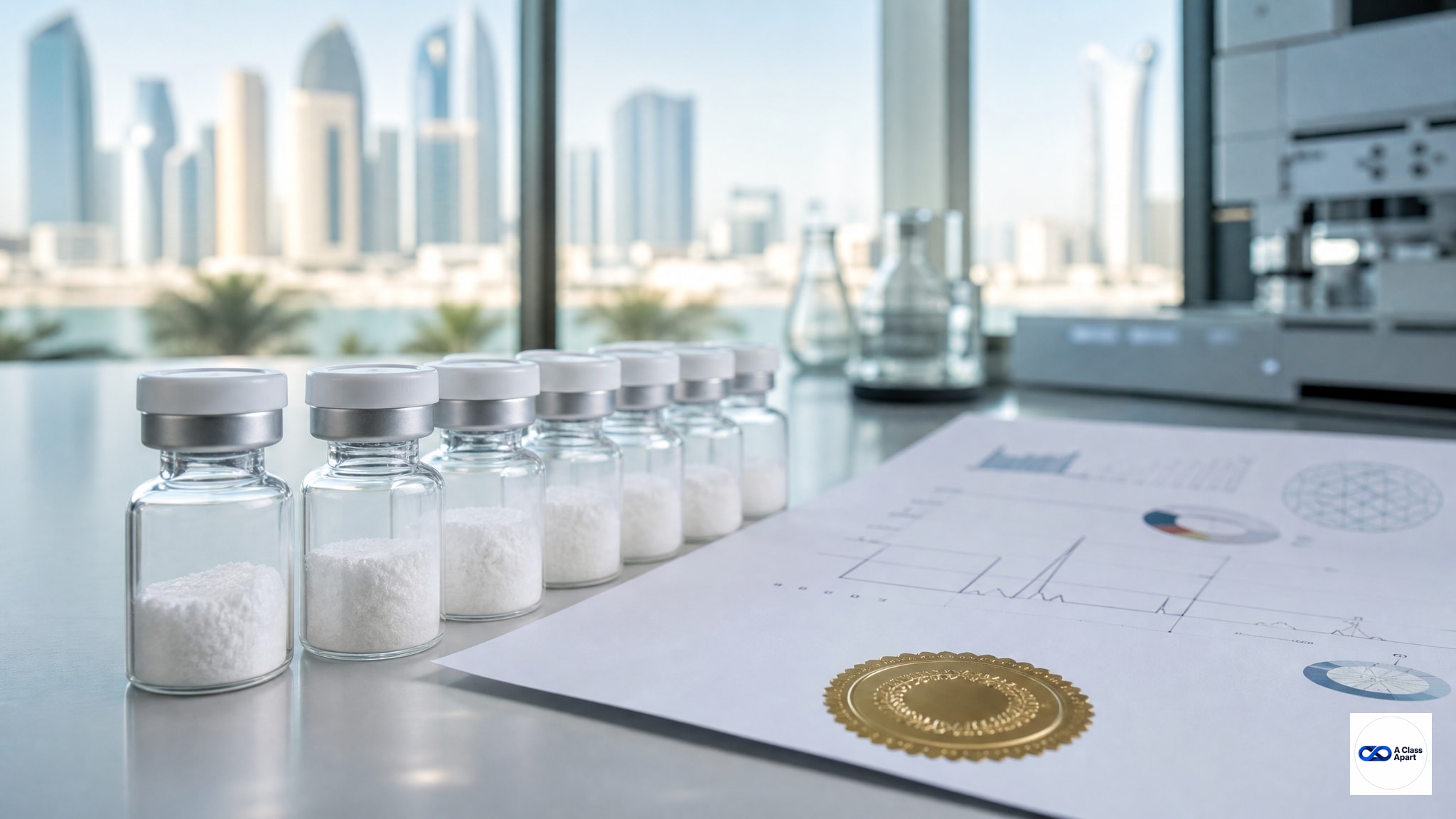
The most frequent issue is a missing or generic Certificate of Analysis. Some vendors attach a manufacturer datasheet that isn't tied to the specific batch being sold. Others provide no COA at all, or one with no batch number, no test date, and no named testing lab.
A second gap is silence on storage and shipping conditions. GHK-Cu degrades faster than many peptides when exposed to heat, so how it travels from warehouse to lab door matters. Listings that don't mention cold-chain handling usually aren't using it.
How GHK-Cu Purity Is Tested: HPLC and Heavy Metal Screening
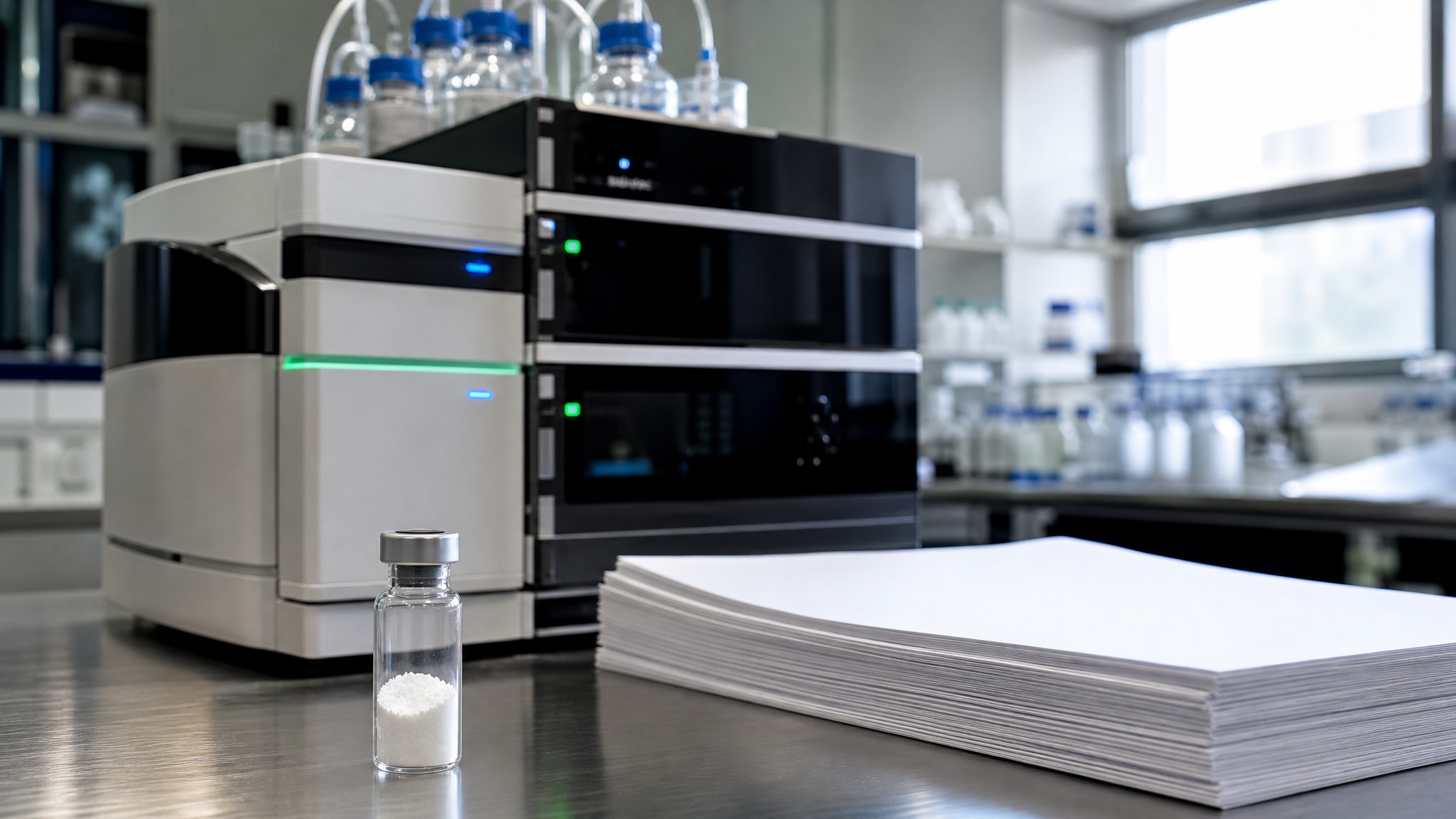
Purity verification for GHK-Cu starts with high-performance liquid chromatography, or HPLC. The peptide research industry uses this method to confirm both the identity of a compound and its purity percentage. A credible COA reports that percentage precisely, typically to two decimal places, rather than rounding to a marketing-friendly number like "99% pure."
For a wider look at how these methods work outside HPLC alone, the article on peptide purity testing methods beyond HPLC covers the complementary techniques labs use to cross-check results.
Reading HPLC Purity Percentages
An HPLC chromatogram shows the compound as a peak against a baseline. The area under that peak, relative to any impurity peaks, gives the purity percentage. Researchers evaluating GHK-Cu should look for a documented figure, not a vague claim. They should also expect the chromatogram, or a summary of it, referenced in the COA. If a listing only states "high purity" with no chromatography reference, flag that gap before you buy.
Heavy Metal and Endotoxin Screening
Heavy metal screening matters more for GHK-Cu than for many other peptides, precisely because it's built around a copper ion. Copper contamination during synthesis, or an improperly sourced copper salt, can introduce trace heavy metals alongside the intended complex. A COA should show that the batch was screened for heavy metals and, ideally, for endotoxins. Results should carry a defined limit, not just a pass or fail with no numbers attached.
This is also where verifying the lab behind the numbers becomes relevant. A guide on verifying suppliers through HPLC testing breaks down how to confirm a stated test was actually performed, and by whom.
How to Read a GHK-Cu Certificate of Analysis
A COA is only useful if a researcher knows what to check on it. For GHK-Cu specifically, the document should tie back to the exact pre-filled pen in hand, not a generic product line.
Key Fields to Check on a Copper Peptide COA
A legitimate copper peptide COA should list the tested purity percentage, the confirmed molecular weight, the copper content, the test date, and a batch number matching the pre-filled pen label. If a COA is missing a batch number tied to that specific order, treat it as a red flag and check it against known patterns of fabricated documentation. For a full breakdown of what each field means and how they interact, how to read a peptide Certificate of Analysis in full is worth reading before your first order.
It's also worth cross-checking the molecular weight figure against the known structure of GHK-Cu itself. The scientific literature documents the compound's structure and chelation behavior, including summaries on reference sources such as PubChem, which lists the compound's standard molecular data for comparison.
If any of these fields are missing, or the numbers look copy-pasted from a generic template, review the seven red flags of a fake peptide COA before proceeding with that vendor.
Batch Numbers and Traceability
Batch-specific traceability means the COA in your inbox corresponds to the actual lot that was synthesized, tested, and shipped to you, not a representative sample from a different production run. This matters because peptide purity can vary between batches even from the same manufacturer. A batch number lets a researcher connect the pre-filled pen, the COA, and the testing lab's records into one verifiable chain. Without it, there's no way to confirm the document reflects what's actually in your hands.
Copper Peptide Stability and Storage in the Gulf Climate
Ambient temperatures in the UAE regularly exceed levels that put lyophilized peptides at risk during transit. For GHK-Cu, that risk runs higher than average.
Why GHK-Cu Is Sensitive to Heat, Light, and Oxidation
Copper peptide complexes like GHK-Cu oxidize more easily than many non-metal peptides. Heat accelerates that oxidation, and prolonged light exposure adds further degradation. This is why storage guidance for GHK-Cu typically calls for keeping it in lyophilized form, cool and dark, until reconstitution. Given ambient and courier-vehicle temperatures across much of the year in the UAE, this isn't a minor caveat. It directly affects whether the peptide you receive matches the purity stated on its COA.
For a deeper look at the mechanics of this, including reconstitution timing, storing lyophilized peptides in hot, humid climates covers practical handling steps for researchers working in the region.
Cold-Chain Packaging From Order to Delivery
A Class Apart provides UAE delivery information and storage guidance. Researchers should confirm the packaging and temperature-handling arrangements required for a specific material before ordering. That means the compound spends less time exposed to peak daytime heat during transit, and it arrives closer to the condition it left the lab in. Once delivered, researchers should still store GHK-Cu in a refrigerator or freezer as specified on the product label, and reconstitute only what's needed for near-term use.
Sourcing GHK-Cu From A Class Apart: What Sets the Process Apart
The core issue with most GHK-Cu peptide GCC listings isn't the peptide itself. It's the absence of an accountable process behind it. A Class Apart builds its approach around documentation that holds up to scrutiny, not marketing copy that reads well but proves nothing.
A Class Apart provides UAE delivery information and storage guidance. Researchers should confirm the packaging and temperature-handling arrangements required for a specific material before ordering. A Class Apart provides available product and batch information on request. Researchers should confirm that any analytical document matches the specific lot before purchase or experimental use.
Verification Steps Before a Batch Ships
A Class Apart provides available product and batch information on request. Researchers should confirm that any analytical document matches the specific lot before purchase or experimental use. Packaging and shipping get cold-chain measures appropriate to the climate, rather than generic fulfillment treatment.
This process is part of the broader standard A Class Apart applies across its catalog, outlined in more detail in the quality and compliance standards for GCC peptide suppliers. Researchers who want to see how GHK-Cu compares against other verified compounds can also review the full COA Documentation peptide catalog for GCC labs.
For researchers ready to order, it's worth taking the time to browse documentation-focused research peptides for sale in the UAE and comparing the documentation offered against the checklist above before requesting a quote.
Frequently Asked Questions About Buying GHK-Cu in the UAE
What COA documentation should accompany a legitimate GHK-Cu peptide purchase in the UAE? A batch-specific Certificate of Analysis showing HPLC purity percentage, molecular weight confirmation, copper content, heavy metal screening results, test date, and a batch number matching the pre-filled pen label.
How is GHK-Cu purity verified through HPLC testing, and what purity percentage should researchers look for? HPLC separates and measures the compound against impurity peaks, giving a precise purity figure. Researchers should look for a specific number reported to two decimal places, backed by chromatography data, not a rounded marketing figure.
Why is heavy metal screening important for a copper-chelated peptide like GHK-Cu? Because GHK-Cu is built around a copper ion, contamination risk during synthesis runs higher than for non-metal peptides. Screening confirms trace heavy metals fall within defined, reported limits.
How does UAE heat and humidity affect GHK-Cu stability during shipping and storage? High ambient and transit temperatures accelerate oxidative degradation of the copper complex. Cold-chain packaging during shipping, and refrigerated storage after delivery, reduce that risk.
What does batch-specific traceability mean and why does it matter when buying GHK-Cu? It means the COA you receive corresponds to the exact production lot in your pre-filled pen, verifiable by a matching batch number, rather than a generic reference sample from a different run.
How can a researcher confirm a GHK-Cu supplier in the GCC is legitimate before ordering? Request the batch-specific COA before purchase. Check that the batch number on the document matches what will be printed on the pre-filled pen. Confirm the supplier can describe its cold-chain shipping practice for temperature-sensitive peptides.
Research-use notice: For laboratory research use only. Not for human or veterinary use, and not intended to diagnose, treat, cure, mitigate or prevent disease.
Explore the A Class Apart research catalogue or enquire via WhatsApp on +971 52 627 8691. Free UAE delivery is available on orders from AED 1,000, and payment via WhatsApp can be arranged if preferred.

Comments